Case study 12 / 12 · Division I
Division I · Case Study 12
Cattle & Pig Farms
Solid–Liquid Separation + Anaerobic Digestion + Aerobic N
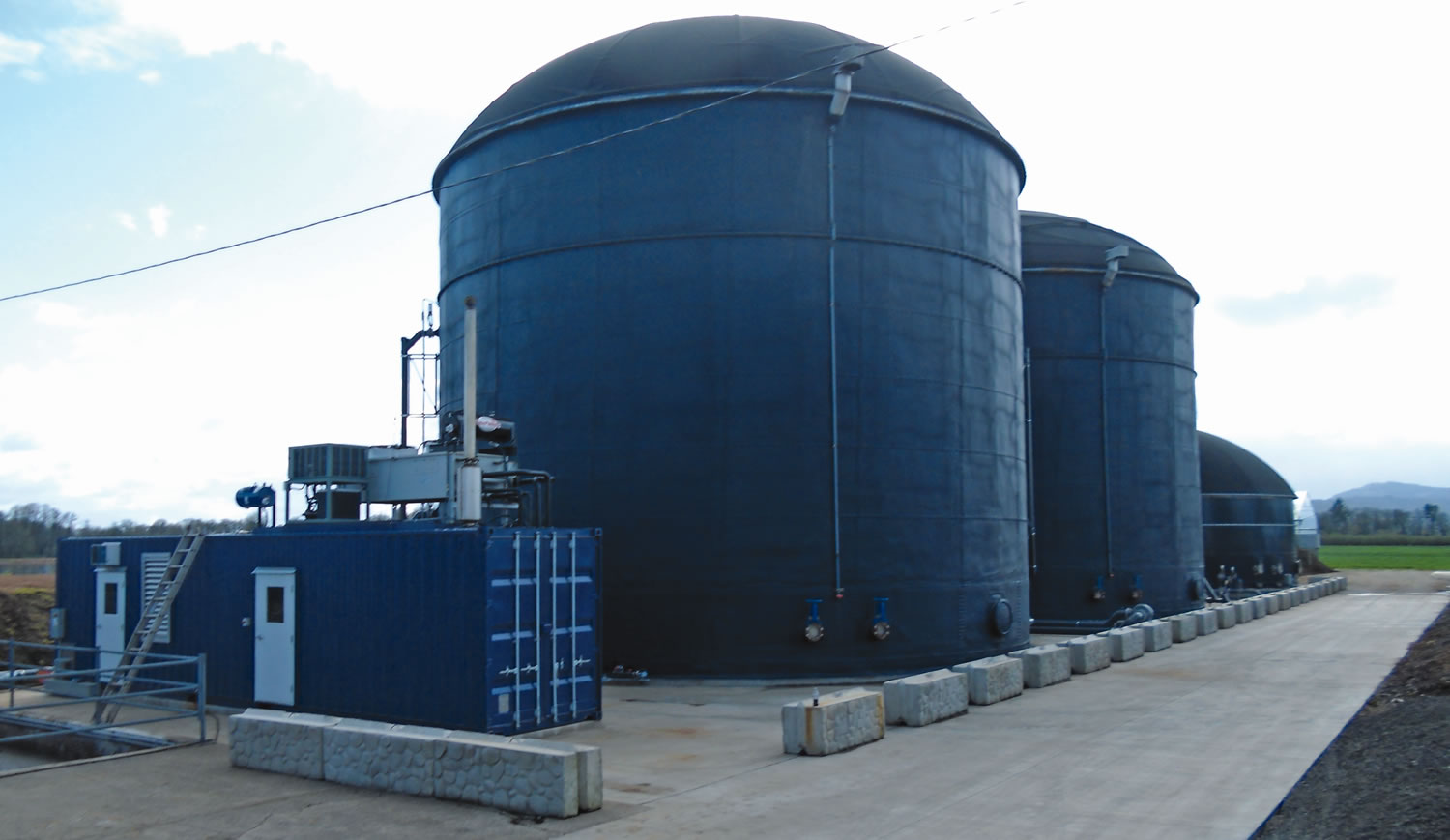
Livestock slurry and barn wash-water carry extreme organic load, suspended solids and nitrogen — manure, urine, feed residues and bedding. KEMISTA separates solids, digests the organics to renewable biogas, then strips nitrogen biologically and recovers nutrients, returning clean water for re-use on the farm.
95%
COD removal
85%
Nitrogen removal
0.30
m³ biogas/kg
Selected treatment train
Slurry / wash
→
Solid–liquid sep
→
EQ / buffer
→
Anaerobic digestion
→
Aerobic N-removal
→
Clarifier + filter
→
Re-use / land
Indicative influent characteristics
Flow
m³/day
variable
pH
–
6.5–8.5
COD
mg/L
15,000–90,000
BOD₅
mg/L
5,000–30,000
TSS
mg/L
10,000–60,000
NH₄-N
mg/L
1,000–6,000
COD reduction along the train
COD (mg/L)
50,000
Raw
35,000
+Separation
6,000
+Anaerobic
800
+Polish
Why this configuration
Energy positive — anaerobic digestion of high-strength manure yields biogas for on-farm CHP and heat.
Up-front solids separation recovers fibre for compost / bedding and protects downstream biology.
Nutrient recovery — nitrification/denitrification plus struvite and ammonia recovery turn N & P into fertiliser.
Closed loop — re-used water cuts freshwater draw, slurry-spreading load and odour across the farm.
Your sector not listed, or a stream that defies the categories?
KEMISTA characterises the stream and engineers a bespoke train — that is what bench and pilot testing are for.