
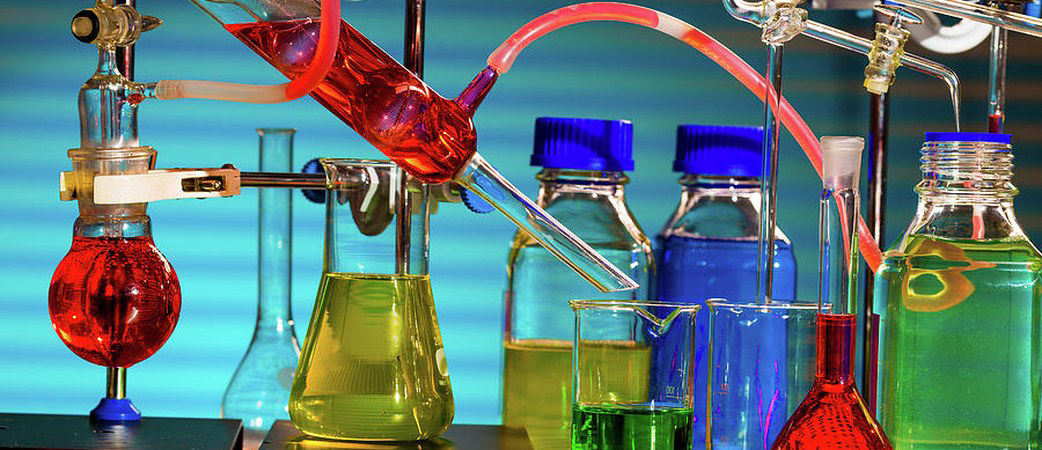
We fingerprint every stream before a single unit is sized.
Organics, metals, salts, nutrients and radionuclides — characterised, then the treatment route is developed and validated by bench testing.
Trace & Elemental
ICP-MS / ICP-OES, AAS and ion chromatography for metals, anions and cations to μg/L.
Organics
GC-MS and HPLC for phenolics, solvents, naphthenics and refractory organics.
Bulk Parameters
COD / BOD / TOC, TSS / TDS, pH, conductivity, oil & grease, turbidity and colour.
Radiochemistry
Gamma spectrometry, liquid-scintillation and gross alpha / beta for nuclear effluents.
Lab routes proven at field scale on the client's real effluent.
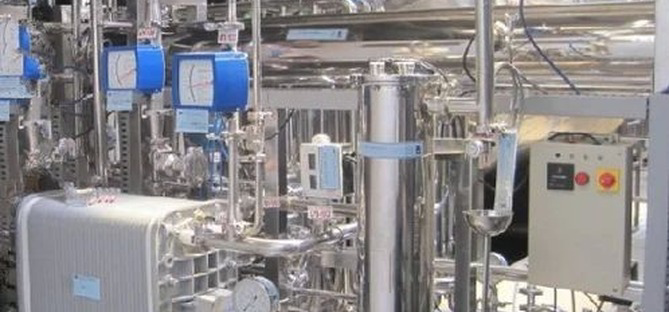
Containerised and skid-mounted pilot units de-risk the design, fix operating windows and underwrite performance guarantees before EPC — the bridge between bench data and a built plant.
Mobile pilot skids
DAF, MBR, RO / NF, EDR / EDI, AOP and evaporation skids shipped to site.
On-site trials
Weeks-long runs on live effluent capture variability and fouling behaviour.
Data & modelling
Mass / energy balances and kinetic models tie pilot data to full-scale design.
Guarantees
Validated removals and recoveries underwrite contractual performance.
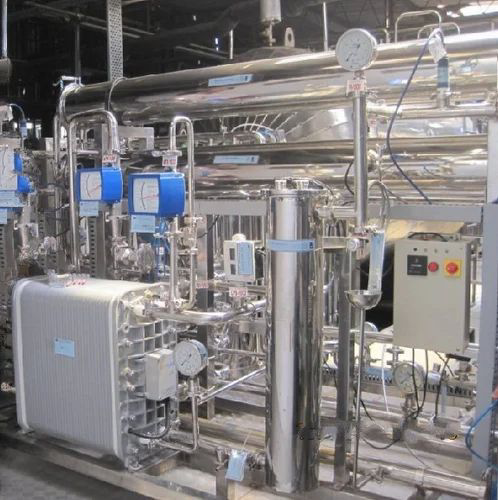
Factory-built, FAT-tested, shipped ready to connect.
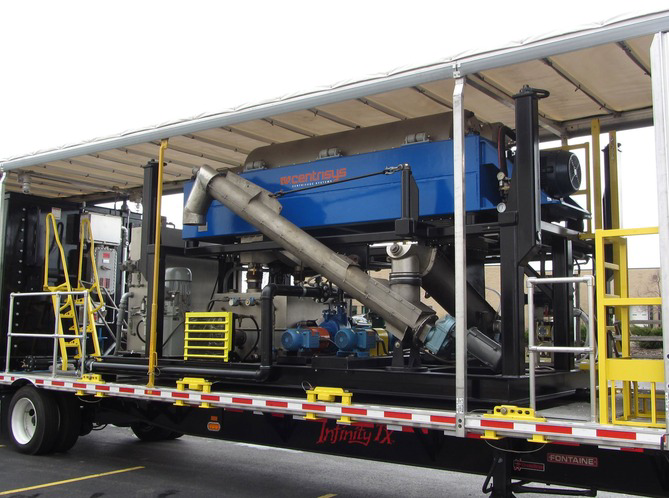
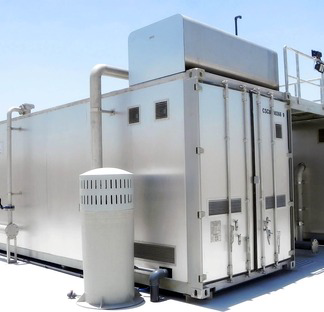
Complete treatment trains are designed, fabricated and assembled in-house as engineered skid-mounted packages and containerised units — pre-piped, pre-wired and tested before dispatch. For temporary, emergency, pilot or remote duty, self-contained plants arrive on road trailers and on wheels.
Engineering and technological tie-ups that keep the portfolio at the front of the field.
Joint research, shared pilots, co-published work and a talent pipeline across industrial, spent-caustic and nuclear streams.
Catalytic wet-air-oxidation catalyst
With a university catalysis group — a robust catalyst that cut WAO temperature and lifted sulfide / COD destruction on refinery spent caustic; validated on a mobile pilot.
Selective sorbents for Cs / Sr
With a national nuclear research institute — engineered sorbents raising decontamination factors for caesium and strontium in liquid radioactive effluent.
Ceramic-membrane fouling control
With a membrane-science centre — cross-flow and back-pulse protocols that stabilised flux on oily and high-solids industrial streams.

Compliance is engineered in, not bolted on.
Every design, fabrication and operation is delivered against the recognised codes that govern quality, environment, safety, pressure equipment and — where activity is present — nuclear safety and radiation protection. The binding code edition is fixed by the project's jurisdiction and permit.